
Breathing,Exercise And Respiratory Diseases
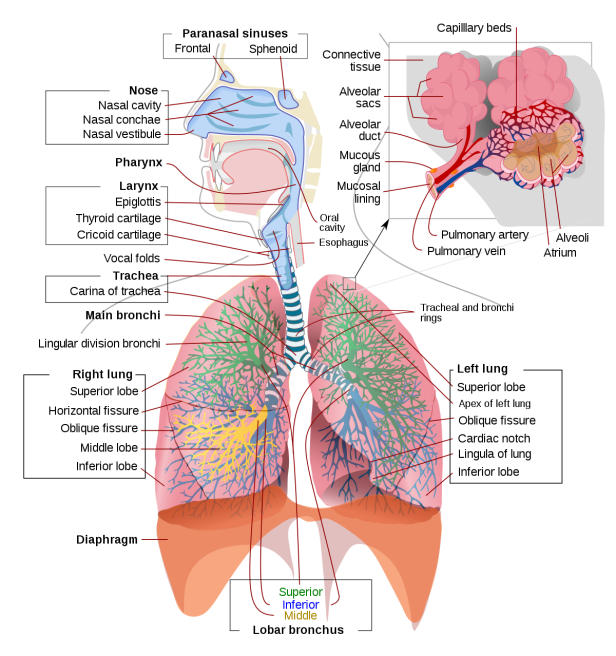
When we are at rest on average we take about 16 breaths per minute. But our breathing rate increases considerably when we start to exercise. Not only does our rate of breathing increase, so does the depth of breathing and heart rate. This all occurs in order to deliver more oxygen and glucose to the muscles at a faster rate and to remove carbon dioxide more rapidly.
How much our breathing rate and heart rate increase during and after exercise can be a good indication of our fitness. A fit person recovers much faster than someone who is unfit. The time it takes for the pulse rate to return to the resting rate (what it was to begin with) is known as the *recovery time or recovery rate.
SMOKING
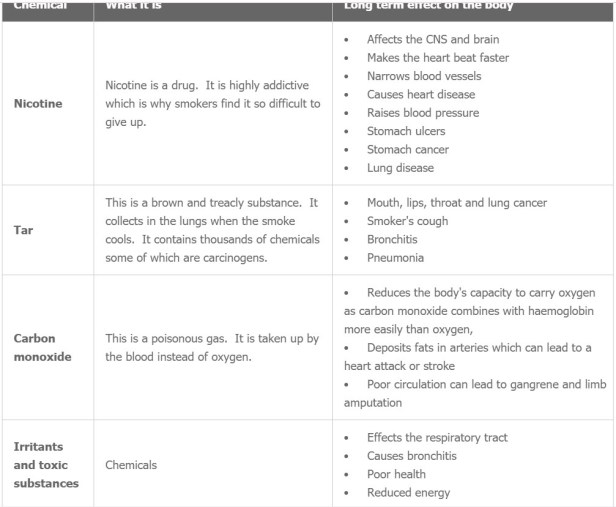
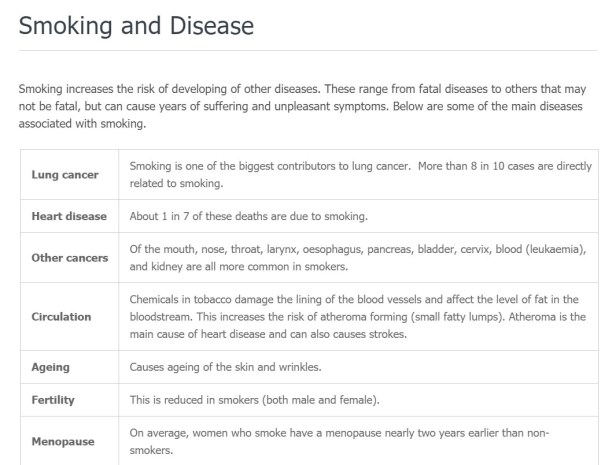
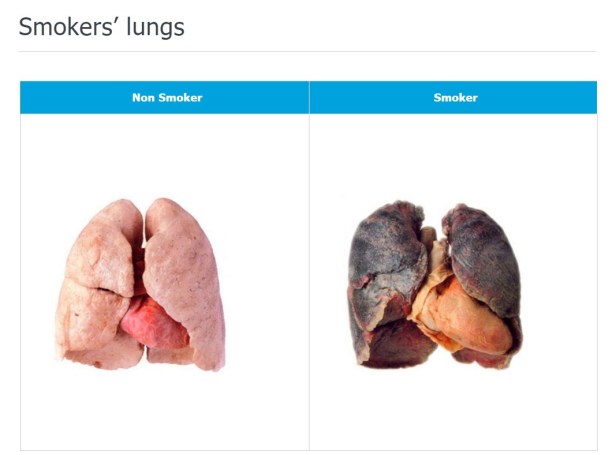
Smoking severely damages your health and contributes to thousands of deaths every year. Cigarettes contain lots of harmful chemicals and these cause damage to the lungs and the heart.
Passive smoking
Smoking is not only harmful to the smoker but can also have a detrimental effect on those around them. Inhaling other peoples’ cigarette smoke is called *passive smoking*. Passive smoking affects people of all ages. It has been linked with the following health problems in:
Children and babies
More prone to asthma
More prone to ear, nose and chest infections
Suffer from wheezing and chronic coughs
Have an increased risk of dying from cot death
Are more likely than average to become smokers themselves when older
Are at an increased risk of developing cancer as adults
Adults
Have an increased risk of lung cancer
Have an increased risk of heart disease
Can make asthma worse
Causes irritation to the eyes, nose and throat
Smoking and pregnancy
Smoking is also extremely harmful during pregnancy and can lead to:
Miscarriage
Bleeding during pregnancy
Premature birth
Low birth weight (Premature and low birth weight babies are more prone to illness and infections.)
Congenital defects in the baby
Stillbirth or death within the first week of life
ASTHMA
Asthma is a chronic condition which affects the respiratory system. It causes inflammation of the bronchioles, which in turn constricts them and makes it more difficult for air to pass through. Excessive amounts of mucus is also secreted which further blocks the bronchioles.
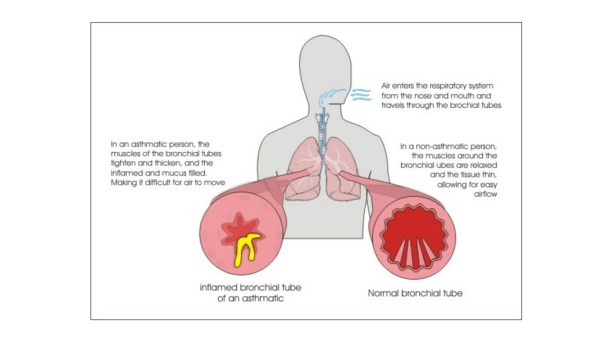
Symptoms Asthma
The typical symptoms are:
Wheezing
Cough
Chest tightness
Shortness of breath
Asthma triggers
Asthma symptoms flare up from time to time and there are certain things that may trigger asthma symptoms in a sufferer. Some of these triggers are listed below:
Infections e.g. colds, coughs, chest infections.
Irritants or allergens – substances which induce an allergic reaction such as house dust mite, pollen, perfumes
Exercise – This can exacerbate asthma, nonetheless exercise is good for asthma sufferer. if necessary patients can use an inhaler before exercise to prevent symptoms from developing.
Certain drugs – 1 in 50 people with asthma are allergic to aspirin, smoking and cigarette fumes
Other fumes and chemicals – E.g. from paints, solvents and air pollution.
Emotion – Stress, emotional upset, or laughing may trigger symptoms.
Allergies to animals – Such as pet cats, dogs, and horses.
Controlling and treating asthma
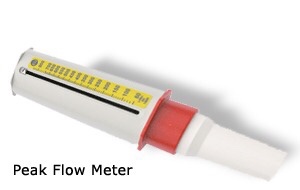
Some patients use *peak flow metres* to keep an eye on how their lungs are performing. A peak flow meter is a small device that the patient blows into. It measures the rate of airflow that can be blown out of the lungs and records this in litres per minute. Patients record a pattern of peak flow over a period of weeks in the form of a graph. This helps them to understand when their airways are under stress and their peak flow is most affected. This can also go onto highlight any factors that may be triggering the asthma.
Doctors may also prescribe medicine in the form of inhalers to treat asthma. Some patients record their peak flow after using the inhaler to the see the effectiveness of the medication.
Doctors may also prescribe medicine in the form of inhalers to treat asthma. Some patients record their peak flow after using the inhaler to the see the effectiveness of the medication.
There are two main types of inhalers used to control asthma:
Preventers (anti inflamatories)
These need to be used every day for maximum benefit and act over a longer time by reducing the inflammation within the airways. With the correct dosage and type of preventive medicine there is little need for reliever medicines.
Relievers (bronchodilators)
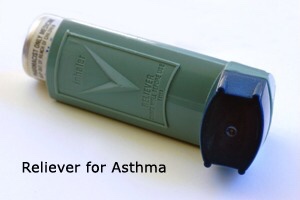
These are fast acting medicines that relax (dilate) the muscles of the airways. They are used when an asthma attack has started. They open the airways making it easier to breathe. They are used to relieve symptoms.
 Educational News Ghana